FedEx, Memphis
& the overnight
promise.
One city. A whole lot of moving parts. A lesson in quality you can take into your own work.
24-page PDF · 1.5 MB · No account required
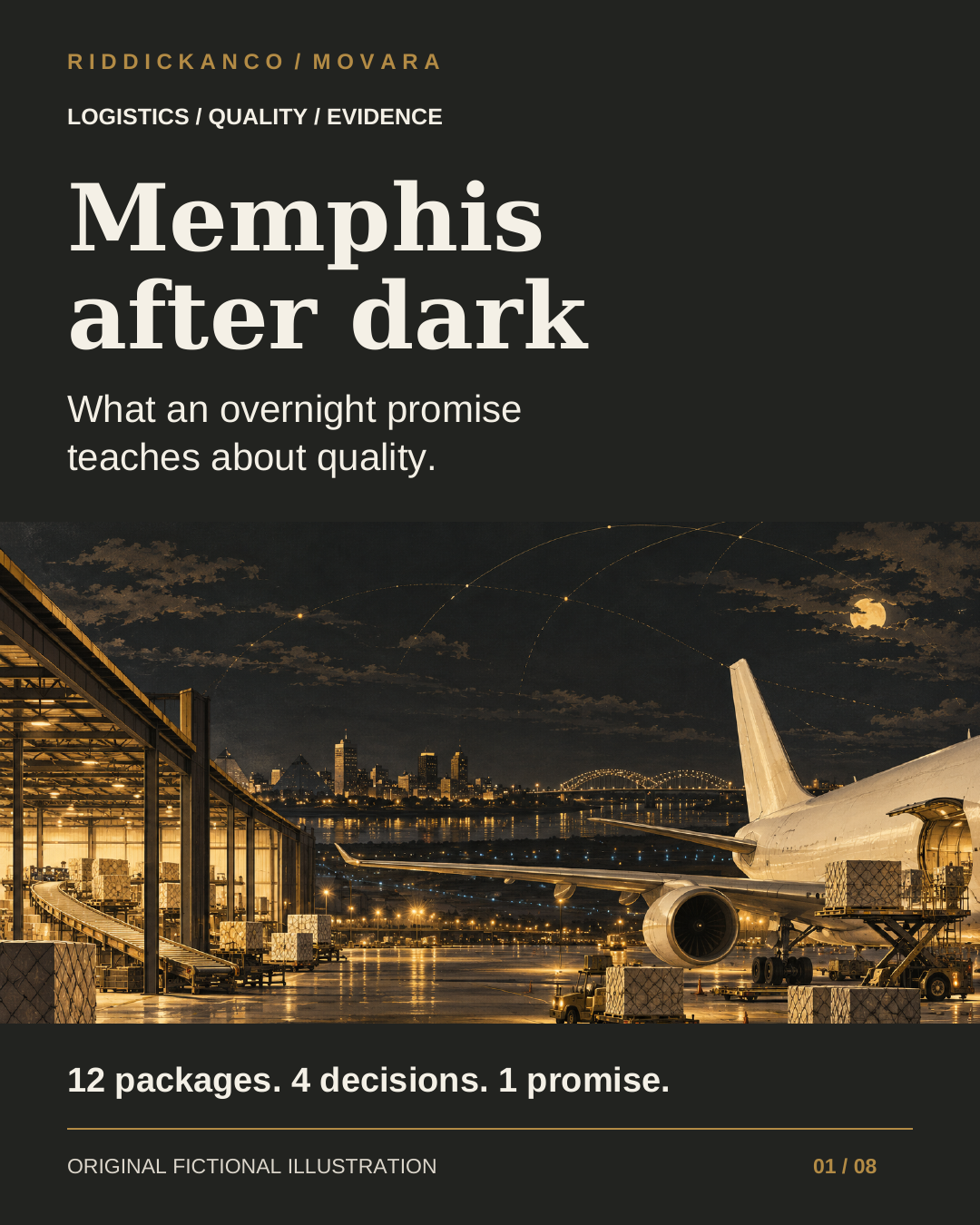
I’m from Memphis, so the FedEx overnight operation is an interesting place for me to start a conversation about quality. Think about the promise: somebody hands over a package, and another person expects it the next day. Between those two people is an entire system that has to work.
The planes get your attention. Then you start following the package and realize how much there is to learn: the label, the scan, the route, the handoff, the people, the equipment and the decision somebody has to make when the plan changes.
That’s why I wanted to bring this onto the site. You can come in curious about FedEx, Memphis or overnight shipping and leave with a better way to look at a process in your own workplace. If you’re exploring logistics, quality assurance, supply-chain work or auditing, this is a good question to follow.
01 / LOOK BEHIND THE PROMISE
Overnight is a connected system.
A hub-and-spoke network brings shipments together so they can be sorted toward their next destinations. The useful idea is coordination: many starting points, planned connections and a limited window to get the right shipment onto the right next leg. Real networks are more complex, and every FedEx shipment does not pass through Memphis.
The scale makes that coordination worth studying. In its October 30, 2024 announcement, FedEx described the Memphis World Hub as spanning 940 acres, with 171 aircraft gates and the capability to process 484,000 packages an hour. That last number is stated capacity, not a claim that this many packages move every hour.
The same announcement describes six-sided scanning and weighing and dimensioning technology in its new sorting facility. That is a practical quality question hiding inside an impressive operation: what information does the next step need, and how do you know it is reliable?
For a real shipment, the service commitment still depends on the service, location and applicable cutoff. Check the current FedEx overnight service details for the shipment you actually need to send.
02 / FOLLOW BOTH FLOWS
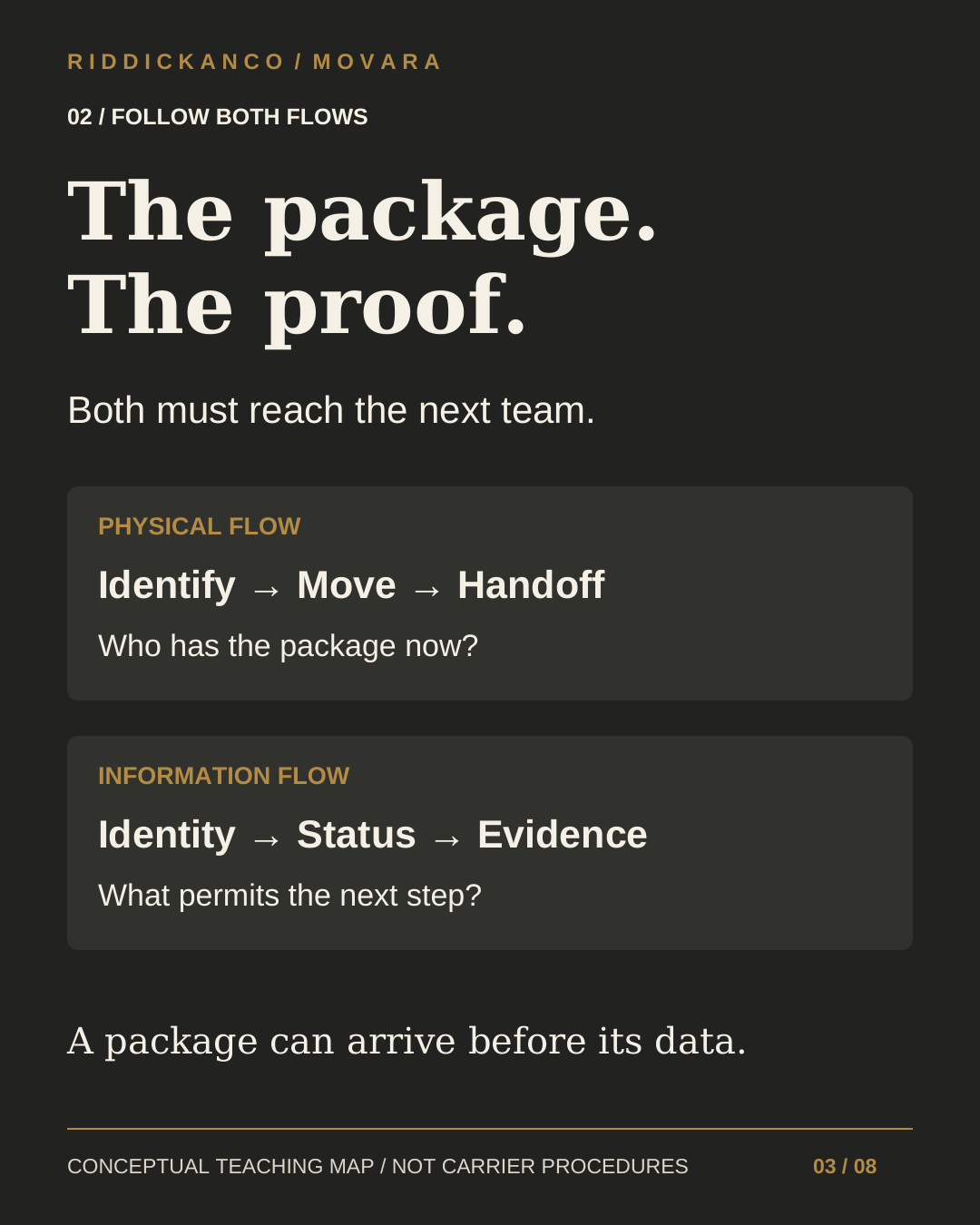
The package moves.
The proof needs to move with it.
Here’s the part I want people to spend time with. A package can be physically present while something important about it is still missing. Who has it? Is its identity clear? What is its status? Who accepted the handoff? What permits the next step?
Those questions apply well beyond an airport. Think about an incoming part, a customer order, a maintenance request or a document waiting for review. Moving the item forward without the right information can move the problem forward too.
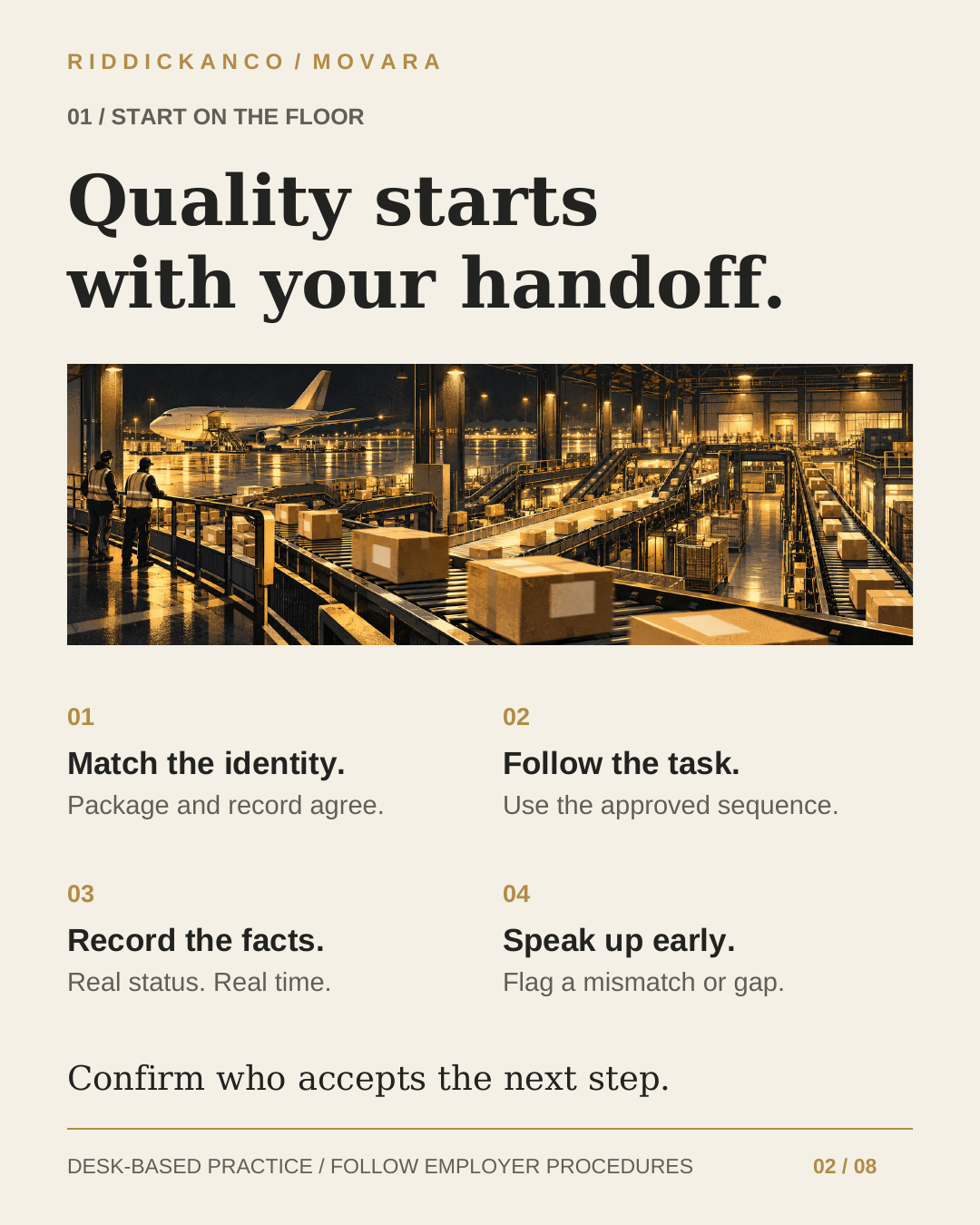
In the casebook, we follow two flows together: the physical shipment and its information and authorization. At every handoff, write down the owner, time, status and evidence. Customs, security, dangerous-goods acceptance and quality disposition have different purposes; one status does not automatically clear the others.
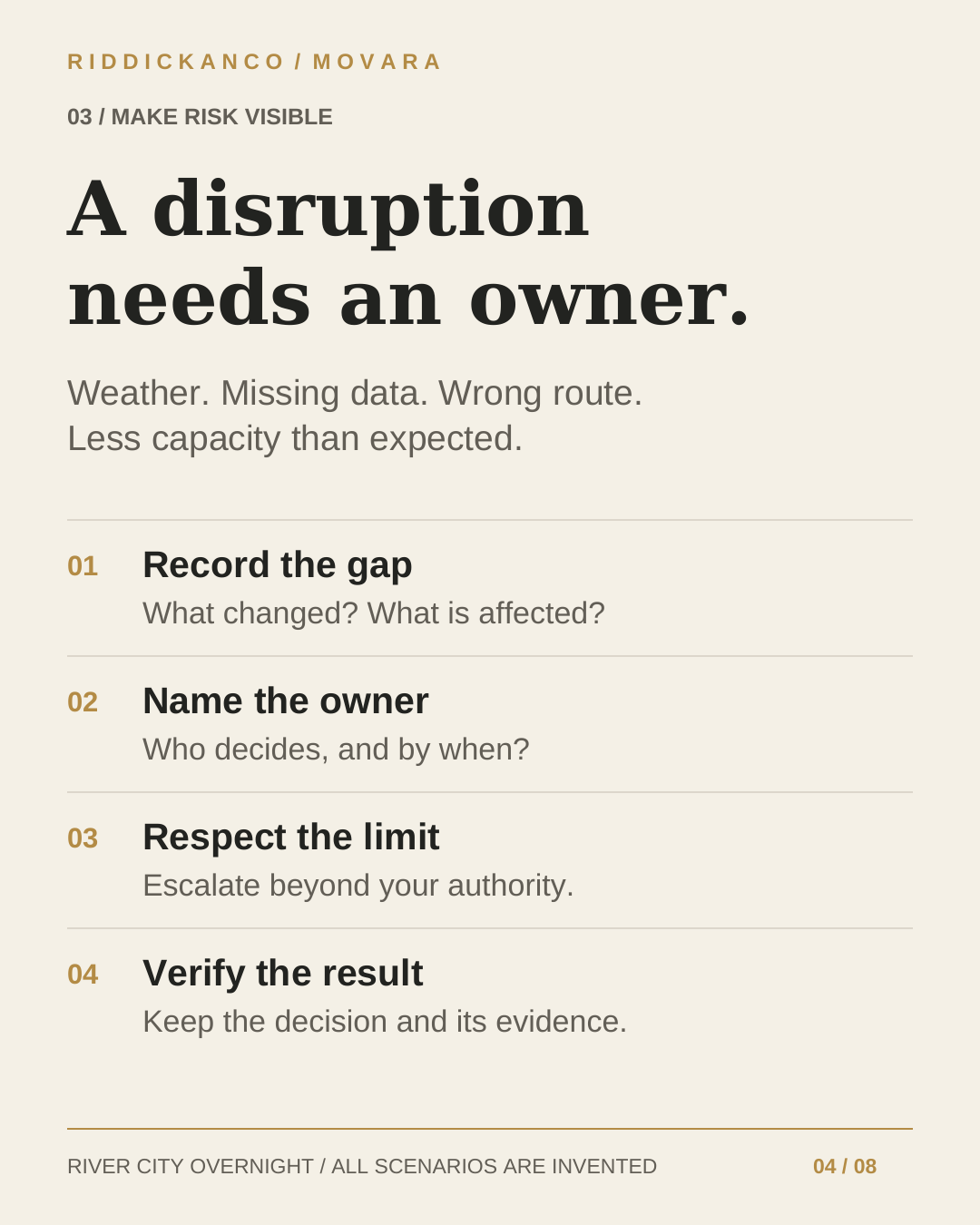
What happens when the plan changes?
A weather delay, wrong route, missing record or unavailable piece of equipment can change what is possible. In our exercise, the useful response starts with a clear record: what changed, what is affected, who has authority to decide and when the decision needs to be reviewed.
Try this with a familiar process. Pick one point where work regularly waits. Ask what the next person needs before they can act. That small question can reveal an unclear handoff, a missing check or a decision that has no named owner.
Choose one handoff you know.
Write four lines: what moves, who receives it, what evidence travels with it and what would make you stop and ask for help. Use a fictional or non-confidential example.
03 / WORK THE CASE
78 kg eligible.
60 kg booked.
Now explain your decision.
To make this something you can actually practice, the casebook uses River City Overnight, a fictional carrier. Its 12-package dataset, delays and decisions are invented. They are not FedEx operating data or instructions.
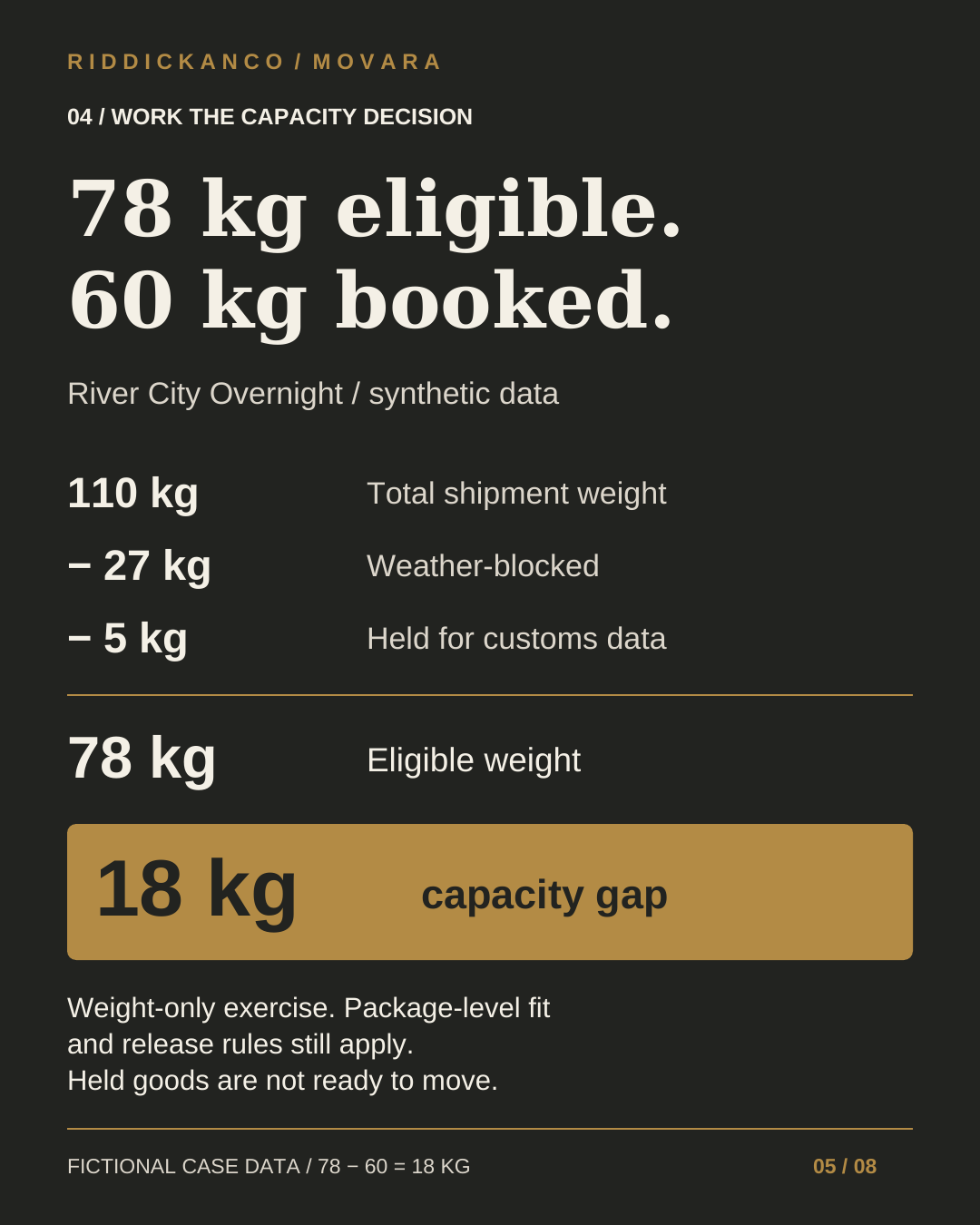
Start with 110 kg. Remove 27 kg that is weather-blocked and 5 kg held for customs data. That leaves 78 kg eligible in the exercise. Compare it with 60 kg of booked capacity and you can see an 18 kg gap.
That calculation identifies a weight-only capacity problem. You still have to check which complete packages fit, keep held goods out of the ready load and identify the authorized decision-maker. A correct subtraction does not authorize a shipment’s release.
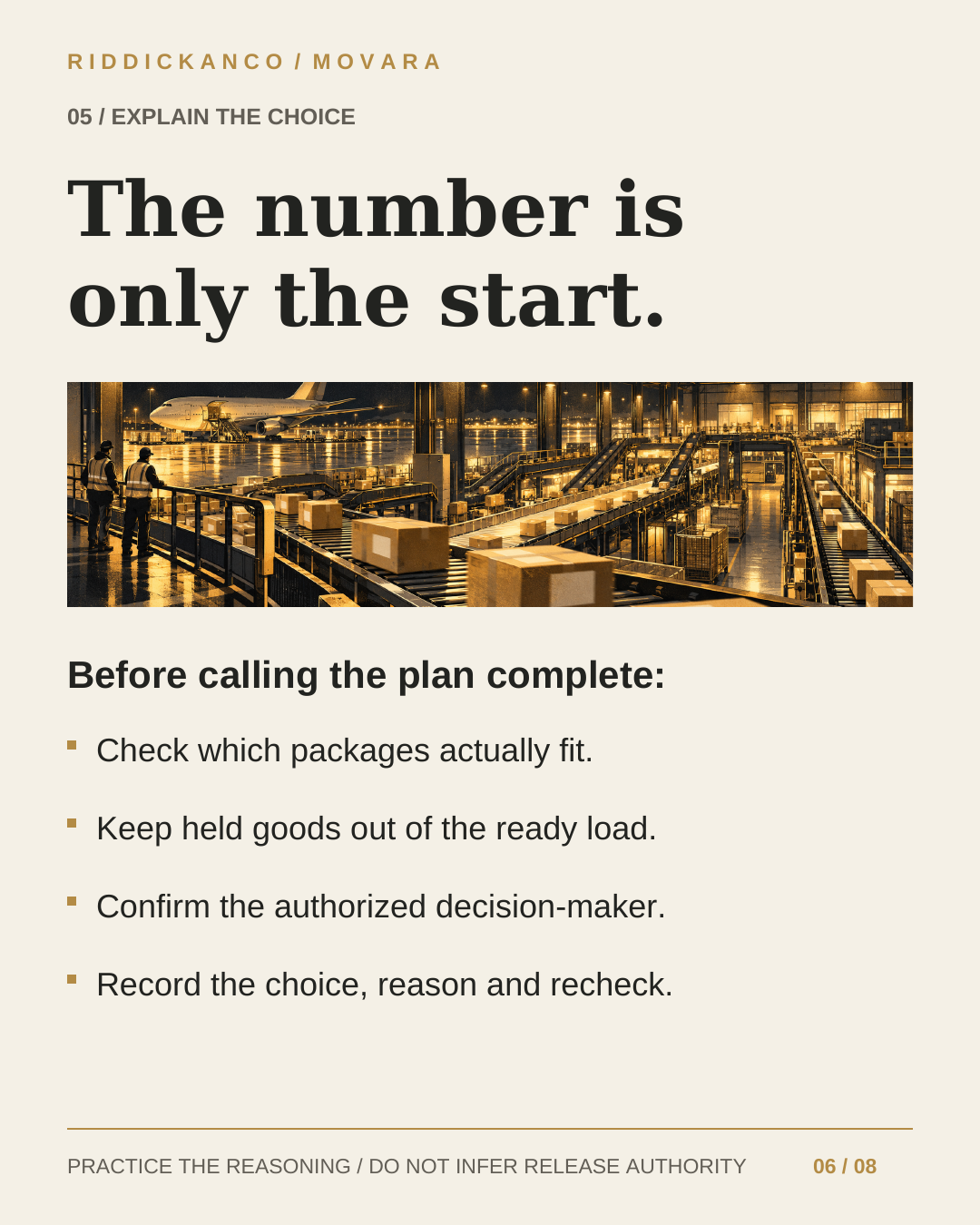
This is where the learning gets useful. Explain what you chose, what you left out, why the decision fits the constraints and what you will check next. If two people choose different valid plans, compare the evidence and tradeoffs behind them.
The full PDF gives you more room to explore weather, mis-sorts, customs information, supplier traceability and other disruptions. Safety, airworthiness, release and product-quality decisions stay with qualified, authorized people. The exercise helps you recognize the question and the owner.
THE FREE TAKEAWAY
Keep the whole case.
Download the 24-page Memphis Overnight Casebook. Read it at your pace, work through the fictional scenarios and keep your practice notes.
04 / MAKE SOMETHING YOU CAN SHOW
Turn the interesting part
into something you can use.
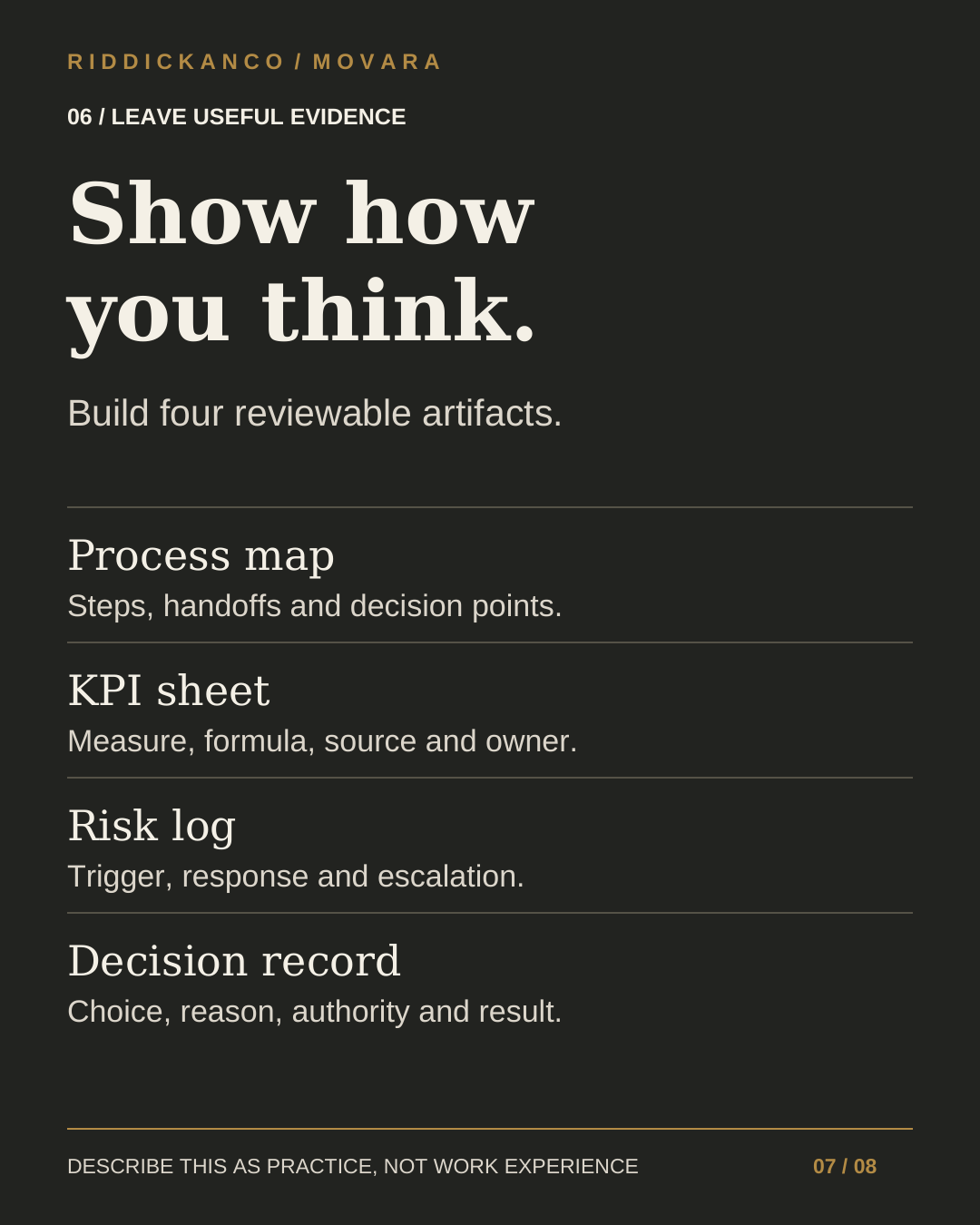
You don’t have to stop at “that was interesting.” Make a process map. Define one useful measure. Write a risk log. Keep a decision record that another person can follow.
For a measure, go further than its name. What exactly are you counting? What is the formula? Where does the information come from? Who reviews it? “On time” needs a defined promise and a clear denominator before it tells you much.
Label your work as learning practice. You can explain the reasoning you developed without presenting a fictional case as employment experience. That honesty belongs in quality work too.
KEEP THE CURIOSITY GOING
Choose your next step.
If FedEx and Memphis brought you here, use that curiosity. Start small, make something useful and follow the next question.
SOURCES & BOUNDARIES
Keep the facts and the exercise clear.
Independent educational commentary by RiddickanCo / MOVARA. No FedEx affiliation, sponsorship or endorsement. FedEx is named to identify the publicly documented operation. All cargo illustrations are original fictional artwork; the River City Overnight scenarios and numbers are invented.
- FedEx: Memphis World Hub automated sorting facility announcement · October 30, 2024. Source for the dated hub capacity and facility features.
- FedEx: 40th anniversary account · 2013. Historical hub-and-spoke network context.
- FedEx: overnight shipping service details · Check current availability and local cutoffs for real shipments.
- Memphis Overnight Casebook · Original fictional exercise and a fuller source register. Research checked October 14, 2026.
This article and casebook are awareness-level learning, not aviation, customs, dangerous-goods or medical operating instructions. Use current official requirements and authorized specialists for real decisions.
← More from the Learning Journal